
Showing posts with label calypso jazz. Show all posts
Showing posts with label calypso jazz. Show all posts
Saturday, 10 August 2024
Island Jazz Chat: Episode 21 – Anthony Pierre


Friday, 1 September 2023
Music buzz | Reviews (Sep/Oct 2023)ª

The Lone Pilgrim Woods
(Jamwax)
Live Mario Canonge Trio
(Aztec Music)
Kula Wroko Kibri Fra Fra Sound
(Pramisi Records)
- These reviews appear in the September/October 2023 issue of Caribbean Beat Magazine.
© 2023, Nigel A. Campbell. All Rights Reserved.
Thursday, 10 February 2022
Kitch @100: A Caribbean Jazz Perspective
2022 marks the 100th anniversary of the birth of famous calypsonian, Lord Kitchener (Aldywn Roberts). This iconic calypsonian added expanded harmony to the language of calypso — along with double entendre lyrics — with his compositions becoming favourites among calypso jazz musicians. Listen to a Deezer playlist of some musicians who have engaged with the Grandmaster's music. Kaiso, kaiso!
Thursday, 10 October 2019
Insomnia by Adan Hagley, an album review¹
Listen here:
Or Read Here:
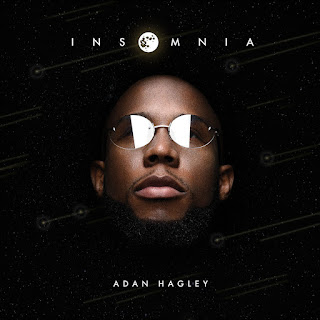 V.S. Naipaul implied that we are a country of mimic men, but our geographic location in the world, our social history makes the pull of myriad sonic and rhythmic influences inevitable. Adan Hagley on his debut album project, Insomnia, has made those connections from his wide listening palette. He cites Michel Camillo and Snarky Puppy, but one hears Ray Holman’s melodic template, Élan Parlē’s early harmonic experiments and the late Raf Robertson’s bold fusion ideas as sonic references that have all contributed to an impressive recording career launch in this music space. The local is not eschewed for the foreign as a model for jazz fusion access and success, and this is a good thing in our context as a region adding to the burgeoning jazz canon.
Adan Hagley returned to Trinidad in 2013 with an undergraduate degree from the important Berklee College of Music, and it shows in his use of an elevated music language and vocabulary that is necessary for serious jazz conversations among soloists and the harmonic ideas that generate that musical interplay.
Or Read Here:

Adan Hagley returned to Trinidad in 2013 with an undergraduate degree from the important Berklee College of Music, and it shows in his use of an elevated music language and vocabulary that is necessary for serious jazz conversations among soloists and the harmonic ideas that generate that musical interplay.
Monday, 28 January 2019
Island Jazz Chat: Episode 3 - Clive Zanda

- Programme Date: 25 January 2019
- Programme Length: 01:08:36
Saturday, 1 July 2017
Caribbean Beat Caribbean Playlist – July/August 2017ª

Shades of Life Marvin Dolly
(Self Released)


Sabiduría/Wisdom Eddie Palmieri
(Ropeadope Records)


- More Caribbean Playlist reviews appear in the July/August 2017 issue of Caribbean Beat magazine.
Sunday, 22 January 2017
A Prologue to an Island Opus - Carnival: The Sound of a People at Queen’s Hall¹

 |
| Etienne Charles with 'Slim' and the Moruga Bois drummers. © Maria Nunes |
Saturday, 25 June 2016
HomeGrown, an album by Dominant Seventh CalypsoJazz Band - a review¹
Listen Here:
Or Read Here:
 In 2016, the idea of a calypso jazz band recording reminiscent of those pre-combo dance band records of the late 1950s to the early 1960s comes as a shock to the tendencies of modern local musicians to follow the faddishness of this new generation of music consumers. Trumpeter Rellon Brown along with his young Dominant Seventh CalypsoJazz Band, on their new CD HomeGrown, peel back the pomp and gloss of current tropes to resurrect the idea of creole dance band music. The music, recorded live in the studio, serves as a kind of instigator for moving hips and feet, and as a beacon of native pride in what worked and what did not.
Recently launched at a concert at the Little Carib Theatre, the album's fare runs the gamut of progressive post bop on Trackers to cloying songcraft on a cover of the Ralph MacDonald-written classic Just the Two of Us. The broad mix gives the impression that this debut its trying to be all things to all men. It certainly fulfils the ambition of showcasing local song writing and indigenous musicianship; Ralph MacDonald was the son of early Trinidadian calypsonian Macbeth the Great and identified with his heritage.
Or Read Here:

Recently launched at a concert at the Little Carib Theatre, the album's fare runs the gamut of progressive post bop on Trackers to cloying songcraft on a cover of the Ralph MacDonald-written classic Just the Two of Us. The broad mix gives the impression that this debut its trying to be all things to all men. It certainly fulfils the ambition of showcasing local song writing and indigenous musicianship; Ralph MacDonald was the son of early Trinidadian calypsonian Macbeth the Great and identified with his heritage.
Friday, 25 March 2016
That Happened last night: Vaughnette Bigford at Kaiso Blues

OR Read Here:
It happened last night. I have known Vaughnette Bigford for a while now as a superb singer in the style of those smoky voiced songstresses from a bygone jazz era reborn in the 21st century. Abbey Lincoln “reborn” as Cassandra Wilson. Nina Simone, however, is the template I see when I see Vaughnette. Another is Miriam Makeba. Them two born she! VOH'net! Our Vaughnette is the modern creole chanteuse, the New World African queen. Not a diva, but the real thing imbuing a Trinidadian ethos missing from many young interlopers singing jazz here. Vaughnette has been a star for many years. A star who has her own in-demand splendid concerts in the south, Shades of Vaughnette. I have written about her three Shades concerts over the years. (I, II, III) I had hosted her at Jazz Artists on the Greens in 2009 before she made her live debut as a SONGBIRD in that series later that year at Aura Restaurant (now Town on Cipriani Blvd.). I recognise her worth. I know that when Vaughnette sings, an audience expectation of a fulfilling experience will be met and exceeded. I know that she will deliver at a level of professionalism that supersedes even stars in other genres.
Saturday, 5 December 2015
A riff on Raf! (Expanded)
 |
| Raf Robertson, 1952 - 2015. Photo by Maria Nunes. All Rights Reserved. |
It all started with the theme song for a radio programme on 610 Radio in the late 1990s. A mid-day current affairs talk show with a female hostess and call-in section. I can't remember the name, but it always piqued my interest, not solely because of the topics, but because of that damn theme song. It sounded local, but it sounded "foreign." Just an instrumental snippet about 30 seconds long that celebrated, what I later came to find out was the genius of Kitchener. The song snippet was from "Branches," the title track of Raf's second album recorded in Toronto by Eddie Bullen. That sound. That was a modern sound that signalled that we were on the right track to globalising our music; a catch-phrase still in use by government state enterprises looking to diversify the economy, which really means "to sound foreign enough to satisfy non-native ears," I am told. That album came out in 1994. Recorded with ex-pat Caribbean folks. We have come full circle.
Tuesday, 16 June 2015
Jazz in Trinidad and Tobago: An Improvised existence in the Islands
I was recently asked to present a paper at a panel on "History, Difference, and Resistance in Post-Colonial Musics" at the 40th Annual Conference of the Caribbean Studies Association in New Orleans, LA, May 25-29, 2015.
Abstract
The native music of Trinidad and Tobago was first recorded on disc in 1912, some five years before jazz music was recorded. Over the next century, the fusion of ideas and the invasion of influences have morphed that local music into various genres like soca, but those musicians who steadfastly maintained that improvised music was the domain of the Americas have created a new sub-genre of calypso jazz that thrives tenuously in the economic space on the island and within the diaspora. This time line of the development and dispersion of the music catalogs its growth, its commercial appeal beyond the border and its true significance within the economic and cultural space of the Caribbean.Keywords: calypso, kaiso, jazz, Caribbean, Trinidad and Tobago, jazz fusion, steelpan, calypso jazz, kaisojazz


Jazz in Trinidad and Tobago: An Improvised Existence in the Islands by Nigel A. Campbell is licensed under a Creative Commons Attribution-NoDerivatives 4.0 International License.
Based on a work at https://www.academia.edu/12835158/Jazz_in_Trinidad_and_Tobago_An_Improvised_existence_in_the_Islands.
Sunday, 5 April 2015
"Jazz" is the new after-Carnival music option in Trinidad and Tobago
 |
| Jazz options in T&T |
Tuesday, 26 November 2013
I Am Élan Parlē: A declaration of Independence
Listen Here:
Or Read Here:
 In 2000, I was living in the US capital, Washington DC, some five hours driving south on the I-95 from the mecca of Caribbean –American cultural existence, New York, and five hours flying north from Trinidad; remote, yet within reach. Howard University, Georgia Avenue, the T&T Embassy on Massachusetts Avenue: district landmarks of connectedness for a homesick soul. Caribbean musical heritage peppers the shelves of the Library of Congress, at the Smithsonian Institution, in the many book stores and those ubiquitous mementos from that age, the record & CD store. The sounds of Trinidad, the echoes of having fun were silently present in this international city.
Or Read Here:
Liner notes for élan parlē’s 2013 CD, I Am Élan Parlē

Subscribe to:
Posts (Atom)