In a series of splendid jazz albums, trombonist and composer Reginald Cyntje has been musically chronicling the range of human emotions, and providing a musical engagement with the human spirit, the soul, the cerebral self. An intelligent understanding of ourselves culminates in this new recording, Rise of the Protester, which documents the resistance of the “hue man” to bondage, to deprivation, to prejudice, and to injustice in both Caribbean and American spaces, reflecting Cyntje’s multiple heritages as a Dominican raised in the US Virgin Islands, and now living in the United States. Taking his cues from a historical record of resistance, literal and figurative — from the likes of Harriet Tubman and “Queen” Mary Thomas of St Croix to Malcolm X and others — Cyntje’s evolution of protest is given gravitas with music that engages the urgent rhythms of Caribbean movement and the contemplative space of jazz. This is by no means mournful dissonance, but a joyous celebration of spirit wanting to be free.
My Good Day Ronald “Boo” Hinkson (Single)
(Zephryn Records)
St Lucian music icon and guitarist Ronald “Boo” Hinkson has a career equivalent to that of an ambassador for his native island and its annual jazz festival. The languid pleasures of Caribbean life are mirrored in the tropical smooth jazz feel of this song. Featuring the vocals of Irvin “Ace” Loctar and Shannon Pinel, and Hinkson’s “signature feathery touch,” this song’s inspirational message of hope and gratitude is made clearer when you grasp the relationship between our Caribbean realities and the vision of the tourist brochure. “Survival is the triumph of stubbornness,” said St Lucian poet Derek Walcott, and in these lyrics, you get the sense that a good day is just around the corner from a series of regular bad yesterdays. The jazz guitar in the hands of giants like Wes Montgomery and George Benson became the smooth sonic antidote to melancholy, and Hinkson merrily continues that tradition here.
Between 1956 and 1964, the major Cuban record label Panart captured the sounds and descargas — improvised musical jam sessions — of the most innovative native musicians on the island. With the freedom of jazz and the soul of Cuba, this is “a stylistic and historic panorama of Cuban music, from big band son montuno to Afro-Cuban rumba, mambo, cha-cha-chá, and country acoustic guajira music,” as described by compilation label Craft Recordings. This bit of history is here remastered for a new generation and collected in a five-LP box set (five CDs are another option), offering a unique glimpse of the zeitgeist of the nation during and after the Cuban Revolution, which nationalised Cuban culture and record companies. Legends of Cuban music recorded in that loose setting include mambo co-creators (and brothers) bassist Israel “Cachao” and pianist Orestes “Macho” López, alongside jazz drummer Guillermo Barreto and other pioneers. A keepsake for the ages.
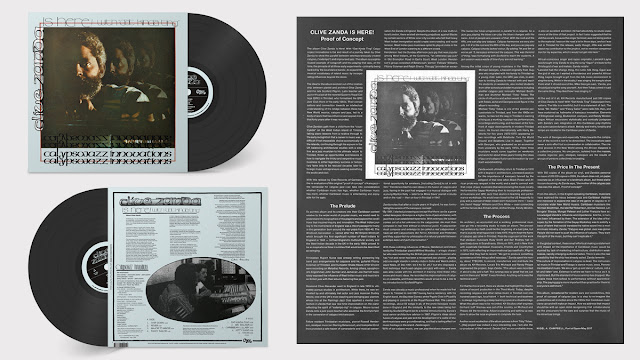
The father of modern kaisojazz, Trinidadian pianist Clive Zanda recounts a career spanning from his days in England in the 1960s innovating with the fusion of calypso in the language of jazz, to his return to Trinidad and his collaboration with Scofield Pilgrim, Bajan-born kaisojazz theorist and pedagogue and beyond. The explorations of this new fusion exercise was given "proof of concept" in 1976 with the landmark album, clive zanda is here! "With dat kinda ting": Calypsojazz Innovations. His continuing efforts to create a philosophy for our understanding of jazz and kaiso music in the Caribbean are told with his development of a new book on the music and how to apply music theory to make kaisojazz music more than a niche music but a legacy.
Composer, producer and recording artist, Michael 'Ming' Low Chew Tung is called by Jazz in the Islands, "the architect of the new calypso jazz in the 21st century in Trinidad and Tobago" for his band/brand Élan Parlē. In this in-depth and revealing chat, 'Ming' gives an oral autobiography that gives clues to how he became the major influence in modern jazz fusion in Trinidad and Tobago, and puts into perspective the trials and tribulations of the native artist in the music industry in the Caribbean. With eight CDs of original music and innovative covers under his belt and a handful of important albums by others on which he is the producer and label host, Ming's position and role in the jazz music sector is secure as a high benchmark for a new generation of musicians and singers to match, if not surpass. Calypso jazz and the jazz fusion in these islands is secure in the hands of Ming.
The steelpan and its sound have become almost the cliché of Caribbean fantasy and escape, but in the hands of musicians with a determination to move away from that old trope, the music can challenge listeners to re-imagine the unique timbre of this creole invention and its canon. North Carolina native Jonathan Scales revels in odd metres and radical time signature changes to produce music for the instrument that can be complex, intriguing and ultimately funky enough for listeners to bop their heads. On this new album, the bass guitar serves as a fulcrum for a rhythmic chase as the steelpan matches it on some tracks like, “This Is The Last Hurrah”, or plays counterpoint standing in awe of the superb musicianship of the likes of Oteil Burbridge, Victor Wooten and MonoNeon on “Fake Buddha's Inner Child” and “The Trap”. Scales's musical hero, banjoist Béla Fleck guests, showcasing the adaptability of the steelpan in musical settings born outside the archipelago.
Jazz in the Islands magazine is proud to announce the launch of its podcast series Island Jazz Chat, featuring conversations with Caribbean jazz and pan jazz musicians based in the islands and the diaspora. In our premiere episode, editor Nigel A. Campbell chats with steelpan jazz pioneer, Rudy "Two Left" Smith. Listen below, and subscribe for future episodes of the podcast.
Liner Notes for the Clive Zanda vinyl album reissue on Cree Records (2017, CLP1220)
The album Clive Zanda Is Here! With “Dat Kinda Ting” Calypsojazz Innovations is the end result of a journey taken by Clive Zanda to show the parallel between extemporaneously created calypso, (“extempo”) and improvised jazz. The album is a sophisticated example of songcraft and trio playing that was, at the time, the pinnacle of all those early experiments—primarily being tackled by the local dance bands—to expand the musical vocabulary of island music by incorporating influences beyond the shore.
The idea for the album evolved out of the relationship between pianist and architect Clive Zanda and the late Scofield Pilgrim, Latin teacher and jazz enthusiast at the revered Queen's Royal College (QRC) in Trinidad, who formalised the QRC Jazz Club there in the early 1960s.
1965/66 QRC Jazz Club executive. Scofield Pilgrim, centre. was the founder and mentor. Photo courtesy Anton Doyle
Their conversations and connection towards an intellectual understanding of the bridge between these two New World music genres, calypso and jazz, led to a body of work that has influence and appeal more that forty years after it was recorded.
Clive Zanda’s path from a child from the “countryside” on the West Indian island of Trinidad taking piano lessons from a relative through to the early recognition that a career in music was a difficult if not impossible choice economically in the islands, continuing through his sojourn in the UK balancing architectural studies with a side line as a jazz musician to his ultimate return to Trinidad, threw up opportunities and lessons in how to navigate the tricky and serpentine music business to either legendary success or temporary fame only to be rescued decades later by foreign music entrepreneurs seeking something exotic and cool.
With this reissue by Cree Records of Germany, the re-evaluation of this original “proof of concept” of kaisojazz—the vernacular for calypso jazz—can take into consideration whether Caribbean music has legs, whether Caribbean music has merit, whether Caribbean music is entertaining and enjoyable for the ages.